
Understanding Team Health
Listen to Lesson 4

You can read the text below or press play to listen. It’s the same words, spoken aloud. Choose what works best for you.
Lesson 4 The Power of a Simple Model
Why a model matters
When leaders are faced with too much data, focus is lost and action stalls. A clear model helps teams see what matters most, sequence attention, and avoid trying to fix everything at once.
The Team Health Check is intentionally simple. It focuses on the few conditions that most strongly shape how work is experienced day to day, and that leaders can realistically influence.
Activity Seeing Patterns Faster - Find the numbers
Find the numbers in order, starting at 1, then 2, then 3, and keep going as high as you can within 20 seconds
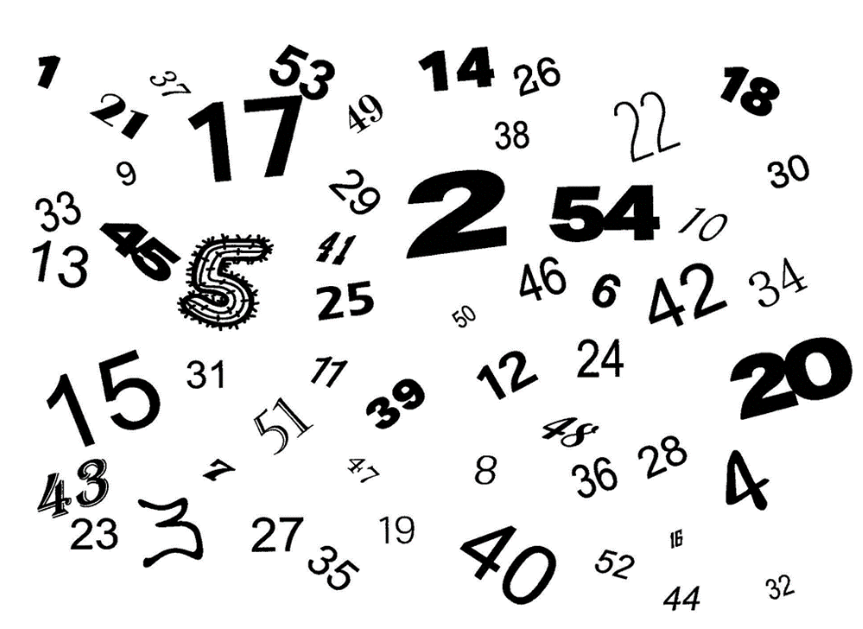
-
Now repeat the activity using this pattern:
Top left quadrant: find 1
Top right quadrant: find 2
Bottom left quadrant: find 3
Bottom right quadrant: find 4
Repeat this sequence and keep going as high as you can within 20 seconds.
Reflection
A simple structure dramatically improves focus and performance. The same principle applies when interpreting team data.
The 12 Team Health Measures
The Team Health Check measures 12 core conditions that influence how people experience work. These are practical, observable areas leaders can influence through clarity, support, recognition, trust, and development.
You do not need dozens of questions. Fewer, well-designed measures create clearer conversations and better follow-through.
The 12 measures are:
My performance is measured against outcomes and metrics that are clearly explained.
I have access to everything I need to perform well in my role.
I am satisfied with the relationship between my manager and me.
My manager supports me to get better at what I am valued for.
The organisation’s purpose is clear and my work contributes to it.
These measures work together. Weak foundations make progress harder in higher-order areas.
Optional Read Each question has a supporting guide with insights, discussion prompts, a simple team activity and suggested actions. If your team has completed CliftonStrengths, the Using Strengths Guide provides another lens by identifying which strengths may naturally contribute to improving each question. You’ll learn how to use both resources later in the course.
Optional Watch These measures are informed by long-standing research into the conditions that shape effective work. This short video provides background on why a small set of well-designed questions can be more powerful than large surveys.
Questions to Support Better Conversations
Alongside the 12 measures are three unscored questions. These exist to add context and support action. These questions are intentionally separate from the measures. They do not add more data. They help teams make sense of what they are seeing.
What’s working well for us right now?
Where are we getting stuck?
What can we do differently to improve how work gets done?
These questions are designed to explore patterns, surface differences in experience, and identify practical next steps the team can own.
Key takeaway
A simple model sharpens attention.
Clear measures guide focus.
Good questions turn insight into action.
You have completed this lesson
Remember to click the ‘Complete Lesson’ button